Member's Portal

Stories & Articles
Getting into the Groove - Part 2 - The Diary
If you’re juggling study, work, and personal commitments, a diary isn’t optional—it’s essential. The question isn’t whether to use one, but how.
Introduction
Paper diary or digital calendar? It’s a question I’m asked often—and one I’ve spent years experimenting with while balancing study, work, and life. Let’s have a look at a few ideas on how to use them.
Paper or Electronic? Using a Diary to Support Study, Work, and Wellbeing
In a previous post, I highlighted the importance of recording assessment due dates in a diary. When I speak with students or work with organisations, I’m often surprised to discover that many people don’t use a diary at all. Yet most of us carry an electronic diary everywhere—on our phones. These calendars are easy to use, always accessible, and highly portable.
That said, I’ll confess that I also love a beautiful paper journal and am currently trialling a new spiral-bound diary. I’ll share how that experiment goes in a future post.
Paper or electronic?
That’s the question.
Why I Use Both
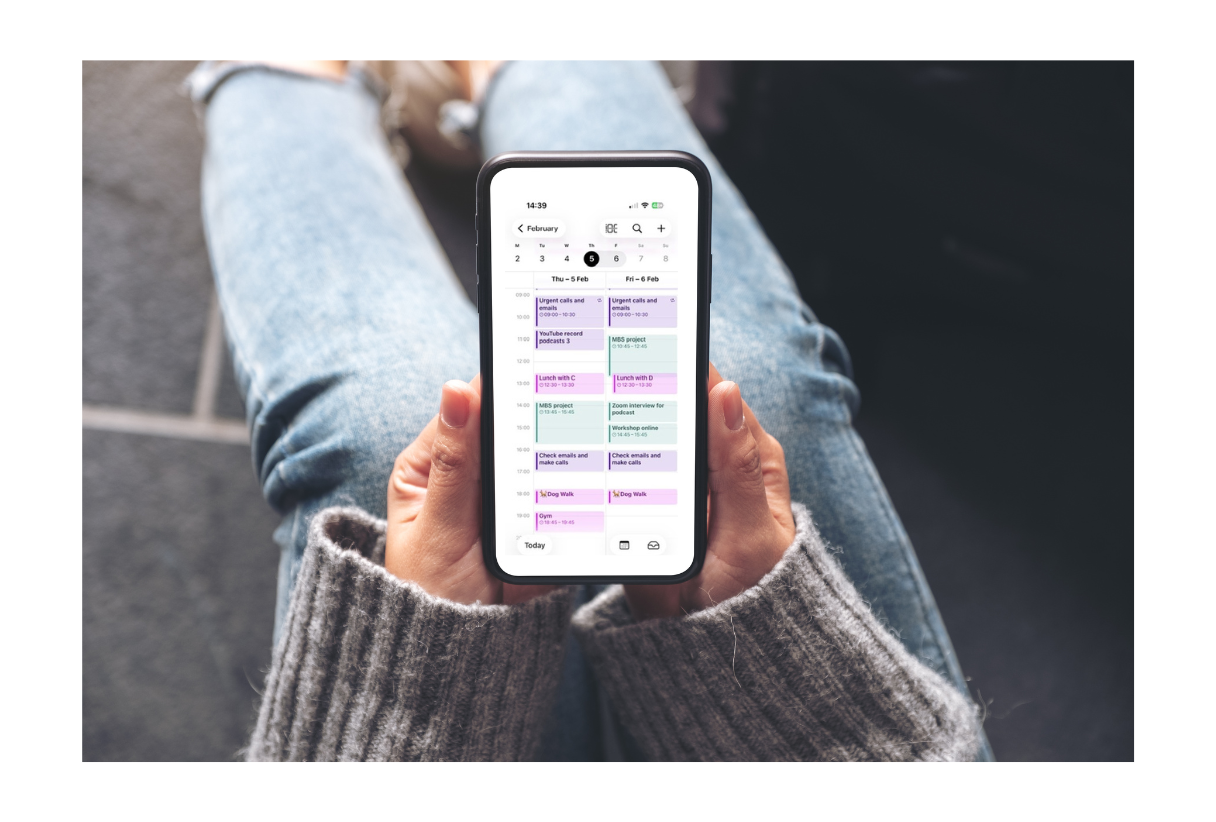
Personally, I use a combination of both systems. I record all appointments and block out time for specific work projects in my phone calendar, which synchronises across my iPad, phone, and laptop. Alongside this, I use a printed diary for more detailed planning.
I’m partial to pastel highlighters and use the same colour scheme in both my paper diary and electronic calendar. As mentioned in a previous blog, I recommend colour-coding each subject when completing your Assessment Overview. These colours can then be carried across to your diary and calendar. I also allocate colours to different projects, which allows me to glance at a page or screen and immediately see what’s coming up.
Time Blocking and Task Grouping
Time blocking is a system I’ve used for many years. Scheduling focused time to work on a project—just as you would schedule an appointment—helps maintain attention and momentum. During these blocks, I avoid checking unrelated emails or social media unless they’re directly relevant to the task at hand.
I also group similar tasks together. For example, I’ll block one period for emails and another for phone calls. This approach works well for studying too. If you have a lot of reading to do, schedule a dedicated reading or preparation block, and decide in advance what you’ll focus on to avoid distraction.
Keeping a notebook—either electronic or paper—is also helpful. Use it to jot down unfamiliar terms, questions, or ideas to revisit later. I’ll return to this idea in a future post.
Making Time for Movement
Exercise is just as important as study. Block time for movement as you would for any other appointment. This might be a walk before or after work, walking the dog, or attending a class—lock it into your diary.
Walking can also double as learning time. Listening to a relevant podcast is a great way to reinforce ideas. While working on my thesis, I often listened to Tara Brabazon’s podcast series, which I found motivating and insightful. Afternoon walks, however, became more social, so I used that time to enjoy my local area and connect with neighbours instead.
With two dogs, regular walks are essential, but I also schedule training sessions such as martial arts or home workouts. On days when I can’t attend a class, I use Apple Workouts at home. Everyone’s preferences differ, but scheduling some form of exercise supports concentration, energy levels, and overall wellbeing.
Don't Forget Breaks and Nutrition
Scheduling lunch and breaks is equally important. Try to step away from screens during these times and prepare healthy snacks in advance. Food preparation can also be added to your diary. Making fruit and vegetables easy to access—and remembering to drink water—can make a noticeable difference to energy and focus.
Final Thought
Try committing to one month of intentional planning using a diary. You may be surprised by how many positive habits begin to form. Once these routines become part of your day, everything feels easier—and your body, mind, and spirit will thank you.
quick links
join our Newsletter
Sign up for our newsletter to enjoy free tips, inspirations, and more.